
Spring 2026 Seminars
Seminar registration for the spring semester will open on Wednesday, November 19, 2025, at noon. Please contact the Honors staff at honors@iastate.edu with inquiries.
The descriptions below indicate whether a seminar counts toward the International Perspective or Innovation Seminar.
Should you try to enroll in a course that is full, you will be placed on a waitlist. If openings become available, you will be sent a message via Workday, allowing you 24 hours to enroll.
Make sure you plan ahead and take at least two Honors courses and two Honors seminars, or the number required by your college Honors committee. Don't wait until your last year to meet the requirements because you may find that you will have some scheduling conflicts. You cannot enroll in more than two seminars in a single semester.
Important: Attendance at Honors seminars is expected. Be sure to read the entire seminar description and requirements. Be courteous and notify your instructor in advance if you are unable to attend class.
Innovation Seminars will be required for the Innovation Pathway students, though all Honors students are invited to take seminars listed under the innovation designator.
Check back regularly for updates!
- HON 3210-1: The Power of Wellness
- HON 3210-2: Exploring Your Past: Getting Started in Genealogy
HON 3210-3: Exploring the world of animals in Chinese script and culture - HON 3210-4: The Florida Project
- HON 3210-5: Writing for Tabletop Games
- HON 3210-6: Broadway: Scandals, Scoundrels, and Scams
- HON 3210-7: Preparing Your Honors Capstone Proposal
- HON 3210-8: Ecology of Pokémon - What Video Game Monsters Can Teach Us About Real World Plants and Animals
- HON 3210-9: Christianity and Science
- HON 3210-10: N/A
- HON 3210-11: N/A
- HON 3210-12: Cities In Film
- HON 3210-13: Dance and Culture
- HON 3210-14: Orchid Mania
- HON 3210-15: Walt Disney & The Walt Disney Company: Communication Magic?
- HON 3210-16: What's in a Song? Popular Music As a Means of Communication
- HON 3210-17: Competitive Scholarships & Grad School Applications
- HON 3210-18: Applied Cartooning
- HON 3220-1: Money Management (Innovation)
- HON 3220-2: Creative Problem Solving (Innovation)
- HON 3220-3: Printing the Future: An Introduction to Additive Manufacturing (Innovation)
- HON 3220-4: The People Around Us (Innovation)
- HON 3220-5: Feeding the Future: Your Major, Your Metaphor, Your Impact (Innovation)
- HON 3220-7: You are what you Consume – Psychology, Pop Culture, and Technology (Innovation)
- HON 3220-8: Conflicts in the Middle East (Innovation)
- HON 3220-9: Fermented Foods and Health Implications (Innovation)
- HON 3220-10: Wild Ideas: Nature’s Lessons for Creative Design (Innovation)
- HON 3220-11: Imagine, Design, Make (Innovation)
- HON 3220-12: Food is/as Medicine (Innovation)
- HON 3220-CR: Service-Learning and Cultural Exploration in Costa Rica (Innovation)
HON 3210-1, The Power of Wellness, Wednesdays 11-11:50 a.m., 1 Credit, Full Semester, Enrollment Limit: 17
About the Course: Experiences with mental health and lack of wellness options have become an increasing problem for college students. It is important for one's overall well-being to create a wellness practice that is sustained and consistent. Students will learn about different forms of self-care, such as meditation, self-affirmations, and journal writing. Each week, students will have the opportunity to participate in a variety of activities that will emphasize the importance of both physical and mental wellness in their daily lives. Students will also get the chance to hear from campus partners, including Student Health and Wellness, Department of Public Safety, and Recreation Services, about available resources that they could incorporate into their personal wellness plan.
About the Instructor: Dr. Alissa Stoehr is an Associate Teaching Professor in the Women’s and Gender Studies Program and Sociology and Criminal Justice Department. She teaches a variety of courses, including Introduction to Women's and Gender Studies, Gender and Sexuality in American Popular Culture, Gender and Sexualities in Society, and Human Trafficking.
HON 3210-2, Exploring Your Past: Getting Started in Genealogy, Wednesdays 3:20-5:15 p.m., Jischke 1151, 1 Credit, First Half Semester, Enrollment Limit: 17
About the Course: Are you curious about where your ancestors came from and how they got here but not sure how to get started? This seminar will teach you the basics of genealogical research. We'll cover the tools, methods, and science available to get you on the way to discovering your family history. We will learn to utilize historical records, online databases, and photographs while emphasizing practical research skills and critical thinking. No special knowledge or skills needed!
About the Instructor: Amanda Knief is the director of Iowa State University's Lectures Program and the university's parliamentarian. She received her B.S. in Journalism and Communication from Iowa State and her J.D. from Drake University Law School. She worked as legislative counsel for the Iowa Legislature before working in Washington, D.C. as a nonprofit lobbyist, nonprofit legal director, and analyst for the Library of Congress' Congressional Research Service. Amanda earned a certificate in Genealogical Research from Boston University in 2020. She specializes in assisting individuals who discover a non-parental event in their DNA that contradicts family history.
Embedded
HON 3210-3, Exploring the World of Animals in Chinese Script and Culture, Fridays 1:10-3:05 p.m., 1 Credit, Second half Semester, Enrollment Limit: 17
About the Course: One of the earliest writing systems, the oracle bone script of the Shang Dynasty (1600 BC–1046 BC), contains many pictographs, approximately 30–40% of the characters. Among these, scripts representing animals serve as excellent examples of how ancient people used distinctive features of animals to create written symbols. Over the past 3,000 years of Chinese history, the roles of various animals have evolved, influencing people's attitudes toward them and shaping aspects of Chinese culture. In this seminar, we will explore the evolution of Chinese script from oracle bone inscriptions to modern writing by examining characters representing three categories of animals: wild animals, animals associated with divinity, and domestic animals(including companion animals). Additionally, we will learn common animal-related idioms—concise cultural expressions—while gaining insight into the complex relationships between Chinese society and these animals.
About the Instructor: Shenglan Zhang, Associate Professor of Chinese Studies. She has taught Chinese for over 13 years at ISU. She is a Fulbright Scholarship (Taiwan) recipient from September 2022 to June 2023. She was awarded the ISU J. H. Ellis Award for Excellence in Undergraduate Introductory Teaching in 2021. Her current research focuses on Chinese script.
HON 3210-4, The Florida Project, Mondays & Wednesdays 3:10-4:10 p.m., 2 Credit, Full Semester, Enrollment Limit: 17
About the Course: In Florida, Walt Disney didn’t want to build a new theme park. He wanted to build an entire new world. The result is a social, cultural, political, and economic experience fraught in both past and present with complications, contradictions, and contestations. This course will take on the task of surveying the development, construction, and operation of Walt Disney World, E.P.C.O.T., and the Reedy Creek Improvement District in central Florida as both an ideal and a reality. Together, we will ask and begin to answer the question of what Disney World means to us as a society, and what its role is and should be in our world at large.
About the Instructor: James McNab is an educator and media producer with over 800 broadcast credits spanning sports, news, corporate media, and live events. At Iowa State University, he teaches video production and broadcast journalism courses for the Greenlee School of Journalism and Communication with a focus on real-world, hands-on learning. James's work bridges the classroom and the control room, as he stays active in the industry as a freelance producer, director, and replay operator for ABC, CBS, ESPN, and others.
HON 3210-5, Writing for Tabletop Games, Tuesdays 3:20-4:10 p.m., 1 Credit, Full Semester, Enrollment Limit: 17
About the Course: Do you enjoy playing table-top role-playing games like Dungeons and Dragons, Star Trek Adventures, or Blades in the Dark, OR do you just like playing games with friends? Do you want to learn how to write compelling game narrative and exciting game scenarios? In this class, we will dive into the fun world of tabletop game writing, led by a professional game writer. We will learn strategies for building bold worlds, crafting engaging stories and scenarios, and enabling player agency. You will get a chance to play and analyze several table-top role-playing games, interact with industry professionals, and write your own game adventures! This class is appropriate for all skill levels—whether you’ve never played a role-playing game before or you are an experienced gamemaster, you will be guided through advancing your skills and knowledge.
About the Instructor: Kelli Fitzpatrick is an author, game writer, and teacher. She is a writer for the Star Trek Adventures tabletop role-playing game from Modiphius Entertainment, and her novel Captain Marvel: Carol Danvers Declassified is published from BenBella. Her short fiction has been published by Simon andSchuster, Baen Books, and others. She has presented panels on gamewriting, taught classes on worldbuilding, and gamemastered at national gaming conventions. She currently teaches Honors classes and serves as the Coordinator of Nationally Competitive Awards at ISU.
Embedded
HON 3210-6, Broadway: Scandals, Scoundrels, and Scams, Wednesday 4:25-5:15 p.m., 1 Credit, Full Semester, Enrollment Limit: 17
About the Course: This semester the Broadway drama won't be limited to the stage as we delve into the scandalous side of Broadway. We'll look at the shows that flopped so hard they became legends (does Spiderman Turn Off the Dark ring a bell?) We'll be looking at the scoundrels who attempted to defraud producers with the infamous musical Rebecca. We'll be talking about the clash of the titans that was the falling out between Patti LuPone and Andrew LloydWebber. Each of you will act as detectives to try and determine what went wrong and who was at fault. And, amidst it all, we'll uncover the showsovershadowed by the dramatics happening offstage.
About the Instructor: Emily Golden: Currently a lecturer in the English department, Emily Golden has worked in theatre since childhood and has a BA in theatre from Willamette University. A lover of musicals, she enjoys nothing more than getting into passionate discussions about Broadway pedantry. This will be her fourth honors seminar in the world of musical theatre, and she is very much looking forward to the chance to revisit some of her favorite classics.
HON 3210-7, Preparing Your Honors Capstone Proposal, Tuesdays 3:40-5:25 p.m., 1 Credit, First Half Semester, Enrollment Limit: 17
About the Course: Are you feeling stressed about planning your Honors Capstone Project? Do you want to learn more about research in different fields of study? Do you want to learn how to draft a meaningful proposal? If so, then this seminar might be for you! Together, we’ll talk about how to move through stages of research regardless of your field of study and whether or not you want to pursue a research project or a creative component. We’ll also talk about how to find a faculty mentor and write a strong research proposal. Students from all backgrounds are welcome to take this course; you are not required to have any background knowledge of research methodologies – together we’ll explore what research can look like. This course addresses four primary questions: What is research, and what can it look like across disciplines? How can you find a faculty mentor to guide you through an independent study? How can you write a proposal that clearly communicates your research goals and research plan? How do you find a research topic that is meaningful to you?
About the Instructor: Erin Todey (she/her) earned her MA in Applied Linguistics and BA in French & International Studies and now works in the McNair Scholars Program, where she teaches an introduction to research course and supports students with their graduate school applications. Erin has taught a range of composition, linguistics, and academic writing courses in different domestic and international higher educational contexts. Her research centers on using discourse analysis techniques to investigate the structure of texts with the goal of helping emerging scholars understand this underlying structure to more effectively communicate their research. Erin is also especially interested in teaching and researching self-promotional genres, particularly the statement of purpose and diversity statements for graduate school applications.
HON 3210-8, Ecology of Pokémon - What Video Game Monsters Can Teach Us About Real World Plants and Animals, M 3:20-4:10 p.m., Credit, Full Semester, Enrollment Limit: 17
About the Course: As of Fall 2024, there are over 1000 different Pokémon across 28 years of video games, trading cards, and more. Many seem to draw inspiration from real-world plants and animals. Together, we will investigate the real-world ecological concepts that these fictional creatures are based on through videos, articles, and in-class discussions. During this course we will also discuss the role that art and media can play in education. By the end of the semester, we will then create our own Pokémon based off of existing animals, plants, and ecological concepts and present them in class. Knowledge of Pokémon is not required but may be helpful.
About the Instructor: Chase Olsen is a Student Services Specialist in the Natural Resource Ecology and Management department. He advises students majoring in Animal Ecology and Forestry. In addition to being passionate about environmental education and the role it plays in conservation, he has been an avid Pokémon fan for about twenty years.
HON 3210-9, Christianity and Science, Tuesdays 11:00-12:50 p.m., Jischke 1151, 1 Credit, First Half Semester, Enrollment Limit: 17
About the Course: Religion and science are two of the cultural and intellectual forces that influence mankind. They are generally interested in different aspects of reality. Science addresses “how” questions while religion answers “why” questions. However, an area of common interest is the origin and history of life.
About the Instructor: About the Instructor: Ann L. Smiley is a Professor in the Department of Kinesiology and is also on faculty in Neuroscience. She directs the Neuromotor Control and Learning Research Laboratory, studying how the brain controls movement, specifically in Parkinson’s disease and, currently, in Developmental Dyslexia. As a teacher, she has a passion to engage her students to think, integrate, and question. One question worth examining is one’s personal worldview. This course provides input for this process. In her personal examination and questioning, she has found science and the Christian faith to be compatible.
HON 3210-12, Cities In Film, Mondays 4:10-5:50 p.m., 1 Credit, First Half Semester, Enrollment Limit: 17
About the Course: This course focuses on the depiction of urban life through one of the most popular forms of media: film. The condition of cities has long been the focus of urban planners, politicians, businesses, historians, poets, architects, and others. Since their advent, films have portrayed varying urban conditions, shaping popular perceptions about cities. Throughout the semester, we will focus on the ways that films portray cities and the urban experience, exploring how the image of the city in film has changed over time. This includes major topics addressed in film throughout time like utopias/dystopias. We will also analyze how the art of film (including casting, writing/plot, lighting, scenery/sets, soundtracks, etc.) lends itself to conveying a message to viewers about cities.
About the Instructor: Dr. Rob Pfaff is an Assistant Professor of Urban Planning and Development in the College of Design at Iowa State University. His expertise is in qualitative research methodologies, including case studies, policy analyses, textual interpretation, surveys, and participatory action research to understand human interaction in cities. His research focuses on public transportation systems, and understanding the social fabric of cities and communities. When not teaching, he prefers to spend time with his dog, and is an avid hiker, backpacker, biker, and motorcyclist who has travelled to 49states and 12 countries.
HON 3210-13, Dance and Culture, Mondays Monday 5:10-6 p.m., 1 Credit, Full Semester, Enrollment Limit: 17
About the Course: Dance is a valuable tool for expressing cultural diversity and is a shared human experience. Looking at dance through an anthropological lens allows us to understand it as a powerful form of cultural expression that reflects values, beliefs, history, identity, and a sense of community. In this seminar, we will explore the history of dance forms and movements from anthropological perspectives. We will address the oral history of dance and consider dance as a lived experience, transcribed via writing and memory that is reliant upon interpretation. We will discuss the impact dance has on the world today and the relationship between dance and society. Dance is intertwined with cultural identity, religious practices, political movements, and mechanisms of social control. This seminar invites students to think critically about the art of dance, and to consider dance as a significant cultural artifact that communicates human history and experiences. Through a series of reflections and discussions, we will engage each other to understand the intersection of dance and culture.
About the Instructor: Serena Wheaton is a lecturer in the World Language and Culture department. She teaches anthropology courses and primarily concentrates on archaeology. While Serena has a graduate degree in anthropology, Serena also has an additional undergraduate degree in Dance. Serena has experience with choreography and dance and has been dancing for most of her life. Additionally, Serena has been a recreational dance teacher for many years. She is interested in the intersection of dance and anthropology.
Embedded
HON 3210-14, Orchid Mania, Tuesdays 1:10-2:00 p.m., TBA, 1 Credit, Full Semester, Enrollment Limit: 17
About the Course: Orchids are among the most fascinating groups of plants on earth. Their beautiful and unique flowers have created an allure that is legendary. Whether it is flower hunters searching the tropics around the world for orchids, plant physiologists trying to understand how these unique plants function, or enthusiastic collectors trying to grow these plants, orchid mania is real! This seminar will focus on the world of orchids, introducing you to the physiology, history, lore, and culture of the world of orchids. This seminar is geared toward non-life science majors.
About the Instructor: Christopher Currey is an Associate Professor in the Department of Horticulture specializing in greenhouse crop production. He specializes in determining how mineral nutrition, light, and temperature affect the growth of ornamental and edible greenhouse crops. Before he was a faculty member, he was a commercial orchid grower and produced thousands of flowering plants. In addition to growing orchids in a greenhouse, he has pursued orchids in the wild and outdoors, ranging from the bogs of northern Minnesota to Ireland, to the forests of Tennessee to Costa Rica, and the mountains of Montana to Thailand and Australia!
HON 3210-15, Walt Disney & The Walt Disney Company: Communication Magic? Friday 11-11:50 a.m., 1 Credit, Full Semester, Enrollment Limit: 17
About the Course: Walt Disney said, “"I only hope we never lose sight of one thing—it was all started by a mouse." In reality, it began with a man, who was a fantastic communicator. Walt knew how to communicate to connect with his audience, making the audience member a central character. The Disney Company has been praised for placing customers first, calling them “guests” and treating them like that, while also being critiqued for crass commercialism, strategically placing gift shops at attraction exits and pumping scrumptious scents on theme park main streets to move customers to buy baked goods. The Disney Company is known as a manufacturer of dreams that come true, while also being a global media entity, causing consumers to expend hard-earned dollars, leading to its market capitalization of $200+ billion. In this seminar, we will look broadly at the communication of Disney, the man and the company – dream maker, myth manufacturer, global conglomerate – from films to theme parks, cartoons to consumer products. Whether you are a Disney lover, a Disney loather, or somewhere in between, this seminar will help you dig deeply into how a media company uses communication at many different levels.
About the Instructor: Dr. Todd Jenks is a communication scholar who has studied and taught communication in many realms, from rhetoric and public speaking to telecommunications to interpersonal, group, and organizational communication. He is a lifelong consumer of Disney communication and an avid Disney theme park visitor. Prior to living in Iowa, he lived in Florida, where he owned annual passes to the Disney theme parks and water parks. Yet while being a devoted Disney fan, Todd is a realist who knows that the Walt Disney Company deserves analysis and reflection, rather than mere consumption without critical thinking. Much of his graduate work was devoted to analysis of the organizational communication of the Walt Disney Company, and to analysis of the rhetoric embodied in Disney films and theme parks. Todd serves as a Teaching Professor in the Communication Studies Program at Iowa State.
HON 3210-16, What's in a Song? Popular Music As a Means of Communication, Friday 9:55-10:45 a.m., 1 Credit, Full Semester, Enrollment Limit: 17
About the Course: A song is more than merely a song – it is a message magnificently packaged into just a few moments. Do you love popular music? Do you like to think about the communication that is happening as you hear a recording artist singing? How is the artist using both the lyrics and the music to convey a message? In this seminar, you will explore how recording artists use their music to tell a story and to connect with their audience (listeners). You will also investigate communication within the recording industry more broadly, including merchandising, promoting, brand-building, and impression management of artists. We will consider a variety of musical genres, as the focus is not on one genre, but rather on how no matter the genre being used, popular music is a form of communicating and messaging (whether country, rap, rock, pop, EDM, or any other genre of music).
About the Instructor: Dr. Todd Jenks is a former entrepreneur whose traveling dance DJ business The TMT Music Machine played at dances across his home state of North Dakota. In addition, he is a former radio DJ. His undergraduate senior thesis was “Communication Rituals in the Realm of Rock and Roll.” He further studied the communication embodied in the music industry and in songs while in the graduate school class Rhetorical Studies of Popular Music. He has a PhD from the School of Media and Communication at Bowling Green State University (Ohio), where he completed coursework in three different departments: Interpersonal Communication, Telecommunications and Popular Culture. He serves as a Teaching Professor in the Communication Studies Program at Iowa State.
HON 3210-17, Competitive Scholarships & Grad School Applications, Wednesday 3:20-4:10 p.m., 1 Credit, Full Semester, Enrollment Limit: 17
About the Course: Applying for a nationally competitive scholarship or to graduate school takes meticulous planning and clear objectives. Applicants interested in these programs should begin early and familiarize themselves with the application process for each award. This course will help you prepare materials to a prestigious scholarship (such as Fulbright, Goldwater, etc.) or to a graduate program. We will work together over the course of the semester to help you identify specific opportunities and devise a plan to develop your application. You will work collaboratively with peers to research potential awards/programs, develop your plan of action, and create an application package. By the end of the semester, you will have all the necessary components of an application to the opportunity of your choice. Note: This class is NOT for job applications or cover letters: it is for scholarship applications and grad school applications.
About the Instructors:
Kelli Fitzpatrick is Iowa State’s Coordinator of Nationally Competitive Awards, helping students apply for prestigious national scholarships such as Fulbright, Goldwater, Truman, Udall, Marshall, Soros, Gilman, and many others. She taught English for ten years and has a background in professional writing and editing. She holds degrees in Secondary English Education and Creative Writing.
Erin Todey (she/her) earned her MA in Applied Linguistics and BA in French & International Studies and now works in the McNair Scholars Program where she teaches and introduction to research course and supports students with their graduate school applications. Erin has taught a range of composition, linguistics, and academic writing courses in different domestic and international higher educational contexts. Her research centers on using discourse analysis techniques to investigate the structure of texts with the goal of helping emerging scholars understand this underlying structure to more effectively communicate their research. Erin is also especially interested in teaching and researching self-promotional genres, particularly the statement of purpose and diversity statements for graduate school applications.
HON 3210-18, Applied Cartooning, Friday 1:10-3:05 p.m., Two Credits: Two class hours/week: Full semester, Enrollment Limit: 17
About the Course: Join the Applied Cartooning seminar! Over the semester, we will explore comics in a social and educational context and then work together to co-create one of our own. Along the way, we’ll learn from young comic artists about their techniques and tips and tricks. This seminar is taught by an amateur foramateur – no experience necessary. Come ready to create, collaborate, and communicate!
About the Instructor: Katherine Richardson Bruna, as a Professor in the School of Education, I co-authored the science comic, Mosquitoes SUCK!, to communicate about my NIH-funded Mosquitoes & Mesummer camp. I am currently working with a team of naturalists on a science comic about the Blanding’s Turtle, a species at risk of extinction. Beyond Iowa, I am the Director of the Oregon Cartoon Project, where I support up-and-coming artists in that state in their comics creation. Because I recently completed a course at the Center for Cartoon Studies in Vermont, I want to share my enthusiasm for applied cartooning with the campus community. I hope you join me!
Embedded
Spring 2026 Innovation Pathway Seminars (These seminars are open to all Honors students)
HON 3220-1, Money Management, R 4:10-6:00 p.m., 1 Credit, First Half Semester, Enrollment Limit: 17 (Innovation)
About the Course: This course is designed to help students acquire sound money management skills. It will include a series of seminars featuring experts in the field of finance. Students will have an opportunity to directly interact with the finance professionals and also learn from their lectures. The objective of this course is help students learn to effectively manage student loans, credit card debt, create balanced budgets, develop good saving habit, identify profitable investment options, and follow proper risk management strategies.
About the Instructor: Shoba Premkumar is a Teaching Professor of Finance and the coordinator for this class.
HON 3220-2, Creative Problem Solving, Fridays 2:15-3:05 p.m., Location TBA, 1 Credit, Full Semester, Enrollment Limit: 17, (Innovation)
About the Course: Do you like puzzles, riddles, and games of strategy? Are you fascinated by optical illusions, mysteries, and brainteasers? Do you get a thrill from figuring out the answer to ordinary and extraordinary problems in unique, offbeat, and often elegant ways? Would you like to?
About the Instructor: Brian A. Rudolph holds a Master of Science Degree in Computer Science from Bowling Green State University and a Master of Science in Information Systems from Iowa State University.
HON 3220-3, Printing the Future: An Introduction to Additive Manufacturing, Wednesday 6-7:40 p.m., 1 Credit, First Half Semester, Enrollment Limit: 17 (Innovation),
About the Course: Have you ever wondered how airplanes, cars, or medical implants can be “printed” instead of being built traditionally? In this seminar, Printing the Future: An Introduction to Additive Manufacturing, we will explore the fascinating world of 3D printing and advanced manufacturing. Together, we will look at how metals, polymers, and even biological materials can be layered into complex shapes that were once impossible to produce. You will gain hands-on exposure to the principles behind additive manufacturing, including how design freedom, material properties, and process choices affect performance. We’ll connect classroom discussions to real-world aerospace, healthcare, and sustainable manufacturing applications. Along the way, guest speakers from Iowa State’s research labs and industry partners will share their perspectives and career journeys. By the end of the seminar, you will understand how additive manufacturing works and how it is transforming engineering and society. No prior technical experience is required — just curiosity and a willingness to imagine how we might print the future together.
About the Instructor: Pail Das, is a Ph.D. candidate in Mechanical Engineering at Iowa State University with research expertise in additive manufacturing, mechanical design, and materials performance. He has served as a teaching assistant for design courses, mentored undergraduate researchers, and developed laboratory procedures for advanced manufacturing and characterization equipment. His work explores how processing conditions influence the microstructure, mechanical behavior, and surface performance of engineering alloys. Pial is passionate about teaching and enjoys creating hands-on, student-friendly learning experiences that connect classroom concepts with real-world engineering applications.
HON 3220-4, The People Around Us, Wednesdays 1:10-2:00 p.m., 1 Credit, Full Semester, Enrollment Limit: 17 (Innovation)
About the Course: Have you ever been aware of the social needs in our Ames community? What do you know about the social services offered in Ames? Are you someone who cares and wants to help those who live in precarious conditions? In this seminar, we will discuss the daily challenges faced by people who experience homelessness, struggle with food insecurity, lack support, or feel excluded. What is their story? How did they end up in this situation? There are many in need here in Ames, but we often don’t see them. We get so busy in our daily lives! That is why, in addition to class discussions, we will spend time volunteering twice during the semester at one of the social services in Ames (For example, Romero House, or Food at First, or Martha’s House of Hope, or Youth and Shelter Services, etc.) to experience first-hand these needs and to build connections with the needy
About the Instructor: Jean-Pierre Taoutel, Teaching Professor of French and Arabic, has been teaching at ISU since 1999. He holds an M.A and a D.E.A in French literature from the Sorbonne Nouvelle in Paris, France. He has taught several Honors seminars. Jean-Pierre enjoys traveling and he has been in 53 countries.
HON 3220-5: Feeding the Future: Your Major, Your Metaphor, Your Impact, Wednesdays 1:10 - 2:00 p.m., 1 Credit, Full Semester, Enrollment Limit: 17, (Innovation)
About the Course: How can every field: engineering, art, education, design, business, journalism or science, shape the way the world eats? This seminar invites students to explore their personal, academic, and professional identity through the lens of global food systems and systems thinking. Using food as both literal and metaphorical material, students reflect on the future of food and their role in shaping it, regardless of their major. We’ll use food as a metaphor, explore imaginative futures, and design personal stories that connect what you study to what the world needs. Expect short readings, lively conversation, and creative projects that help you see your place in the world through a new lens.
About the Instructor: Dr. Smaranda Andrews is an Associate Teaching Professor in FSHN with expertise in agricultural history, global food systems, and science communication. She is a certified systems thinking facilitator, having completed a year-long intensive training with the Waters Institute for Systems Thinking. Dr. Andrews brings over two decades of teaching and international project experience, including collaborations with the Food and Agriculture Organization through the CALS Dean’s Leadership program. Her teaching blends systems thinking, creativity, and future-facing inquiry to help students find their voice, connect their field of study to global challenges, and imagine the kind of future they want to help build.
Embedded
HON 3220-7: You are what you Consume – Psychology, Pop Culture, and Technology, Mondays 4:25-6:20 p.m., 1 Credit, 2nd half semester, Enrollment Limit: 17 (Innovation)
About the Course: “You are what you consume” does not just apply to food - it could also apply to what you watch, scroll, and stream. Every TikTok trend, Netflix binge, Instagram reel, or Spotify playlist shapes how we think, feel, and behave. In this seminar, we will explore how pop culture and everyday technologies influence our minds through the lenses of psychology and human factors. How and why do apps keep us hooked? How do games motivate us? What do films like Inside Out or Black Mirror reveal about our relationship with psychology and technology? Together, we will examine how design choices shape attention, identity, and well-being, while reflecting on the digital diets we consume daily. You will keep a media journal, debate the ethics of design, and even ideate and redesign a pop culture/social media app to be more human-centered. This seminar invites you to ask: if you are what you consume, what’s on your menu? The goal of this seminar is to help students examine how media and technologies they consume every day—social media, games, films, and apps—shape their attention, identity, motivation, and well-being.
About the Instructor: Visruta Murali Aiyer is a Master’s student in Human-Computer Interaction at Iowa State University. With a background in Psychology and experience in human factors research, she studies how technology influences human behavior, well-being, and everyday experiences, and hopes to bring this passion into the classroom to create interactive and relatable learning experiences.
HON 3220-8: Conflicts of the Middle East, Thursdays 2:15- 3:05 p.m., 1 Credit, Full Semester, Enrollment Limit: 17 (Innovation)
About the Course: What are the current political conflicts in the Middle East? How to understand the wars in the Middle East? In this seminar, we will examine the current political conflicts and wars in the Middle East. We will discuss in depth the Arab-Israeli conflict, The Lebanese War, the Palestinian question, and other regional issues (Iraq, the Kurds, Iran, Syria, Afghanistan, etc). We will understand the “complicated Middle East” and how these conflicts have been impacting the war on terrorism.
About the Instructor: Jean-Pierre Taoutel, Teaching Professor of French and Arabic, has been teaching at ISU since 1999. He holds an M.A and a D.E.A in French literature from the Sorbonne Nouvelle in Paris, France. He has taught several Honors seminars. Jean-Pierre enjoys traveling and he has been in 53 countries.
HON 3220-9: Fermented Foods and Health Implications, Fridays 11-12:40 p.m., 2nd half semester, Enrollment Limit: 17 (Innovation)
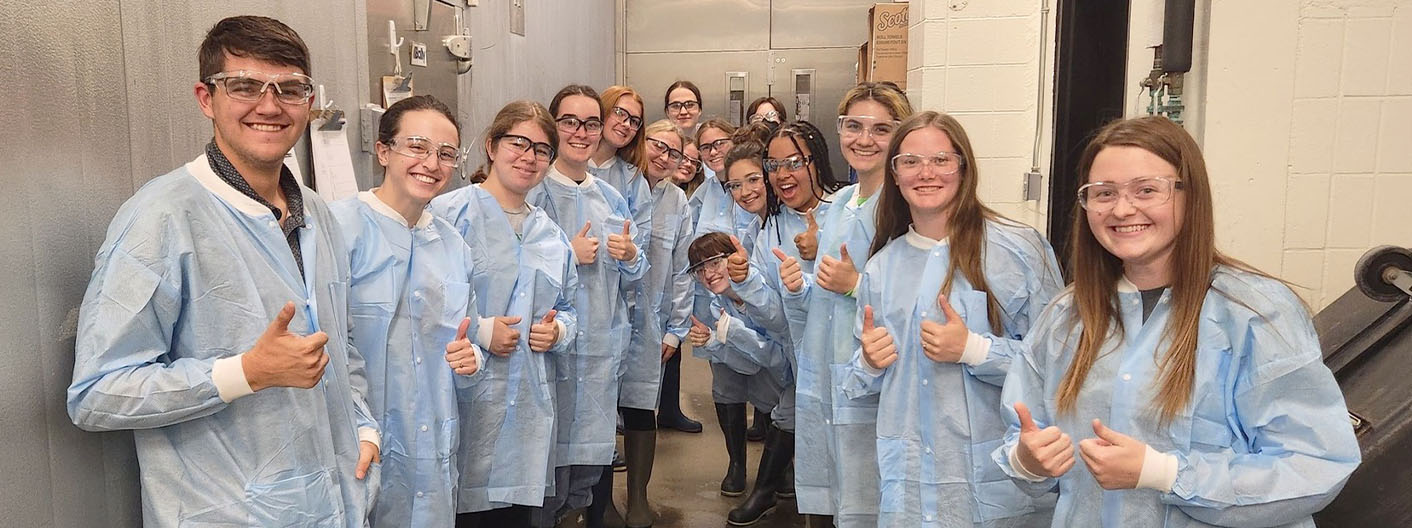
About the Course: Fermentation is an ancient way of preserving food and beverages. Fermented products such as bread, beer, wine, cheese, yogurt, and kimchi are central staples in many cultures. Necessity, economics, and taste were important drivers of producing these foods and beverages. More recently, the health implications of fermented foods have been studied. In this seminar, you will explore the process of fermentation, including making and sampling non-alcoholic products such as kombucha and yogurt. You will be able to observe fermentation on a larger scale in the pilot plant of the Center for Crops Utilization Research and the ISU Brewery. As you learn about fermentation, you will also examine research related to human health.
About the Instructor: Dr. Lorraine Lanningham-Foster is a professor and former Chair in the Department of Food Science and Human Nutrition. Her research program focuses on understanding the relation between diet, physical activity, and pediatric obesity, including developing the necessary tools and research strategies to work with children and families. Dr. Lanningham-Foster is the chair of the ISU Institutional Review Board and teaches undergraduate and graduate-level courses related to nutrition and health. Dr. Zhiyou Wen is a professor of Food Science and Human Nutrition at Iowa State University. He is also the Director of the Center for Crops Utilization Research (CCUR). His research has focused on bioprocessing engineering, green and sustainable food, fuel ,and biomaterials processing technologies.
Embedded
HON 3220-10: Wild Ideas: Nature’s Lessons for Creative Design, Tuesdays 2:15-3:00 p.m.,1 Credits, Full Semester, Enrollment Limit: 17 (Innovation)
About the Course: In this seminar, we will explore nature from a perspective, seeing it not just as a setting or resource, but as a source of inspiration for designing more effective and environmentally responsive systems. Across many disciplines, designers and scientists look to nature for ideas that inform innovation on multiple levels. Together, we will discuss the role of nature in these examples, examine key concepts in bio-inspired approaches to design, and reflect on their cultural, social, and environmental implications. Our materials will include short clips from nature documentaries, selected readings from books, exploring through nature databases, and examples of bio-inspired designs. You’ll be invited to read or watch the assigned materials, in-class group brainstorming sessions, and actively engage in class discussions as we explore how nature can shape creative thinking and design practice.
About the Instructor: Dr. Miray Boga is an Assistant Professor of Industrial Design with expertise in bio-inspired approaches to design. Her M.Sc. research explored natural analogies in design education, and her Ph.D. focused on biophilic design in relation to user product preferences. She has taught practice-based courses on bio-inspired system design and delivered related seminars at both undergraduate and graduate levels. Currently, she is leading an ongoing research project on bio-inspired character and game design.
Embedded
HON 3220-11: Imagine, Design, Make! M/W 1:10 -2:00 p.m., Location TBA, 2 Credit, Full Semester, Enrollment Limit: 17 (Innovation)
About the Course: Step into the world of making with Imagine, Design, Make!, where you will develop foundational skills to bring your ideas to life through hands-on design and fabrication. Using the cutting-edge resources of the Student Innovation Center, you will learn about shop safety and basic practice in wood and metalworking, 3D printing and scanning, and laser cutting and engraving. You will also select and learn about another specialized skill that interests you, such as digital media, digital modeling and visualization, textiles, painting and finishing, or how to incorporate physical computing into “smart” designs. By exploring the concept-to-completion cycle, you will build an individualized project and prototype that showcases your skills and creativity.
About the Instructor: Dr. Wickert serves as provost emeritus, president’s chair in engineering, and professor of mechanical engineering. He is a fellow of the National Academy of Inventors and the American Society of Mechanical Engineers. During his dozen years as university provost, Dr. Wickert was responsible for Iowa State University’s eight academic colleges, student recruitment, and financial aid, the research and extension enterprises, and the Ames National Laboratory. Iowa State conferred 90,000 degrees during those years, increased sponsored research by 60%, hired half its faculty, and set records for graduation rate, time-to-degree, and multicultural and first-generation student enrollments. Prior to his service as provost, Dr. Wickert was dean of engineering and department chair of mechanical engineering at Iowa State University; an engineering professor for 17 years at Carnegie Mellon University; a visiting professor at the Helsinki University of Technology; and a visiting bye-fellow at the University of Cambridge’s Selwyn College.
HON 3220-12: Food is/as Medicine, Thursday 1:10-2:00 p.m., 1 Credit, Full Semester, Enrollment Limit: 17 (Innovation)
About the Course: This seminar will discuss the relation between whole foods, nutrition, and dietary bioactive compounds and health, primarily chronic diseases. This includes diabetes, cardiovascular disease, neurological disease, cancer, and autoimmune disease, to name a few examples. Focus will be on how intake of foods and supplements play a role in both promoting disease and preventing or treating adverse conditions. The seminar will also discuss how understanding nutrient metabolism can be exploited in the design of pharmacological approaches to treat diseases such as cancer. Food as/is medicine also touches on the concept of precision medicine, which involves both nutrigenomics and nutrigenetics. Epigenetics and the inheritance of predisposition to specific diseases will also be a focus of this seminar.
About the Instructor: Dr. Schalinske is a Morrill Professor in the Department of Food Science and Human Nutrition. In addition to teaching within the nutritional sciencecurriculum, he conducts research using preclinical models to understand the relation between diet, nutrients, and chronic diseases, such as diabetes, obesity, cancer, and birth defects. The NIH, USDA, American Diabetes Association, American Heart Association, CancerPrevention Foundation, American Institute for Cancer Research, and various food-based commodity boards have funded his research. Dr. Schalinske currently serves as the director of Graduate Education for the Interdepartmental Graduate Program in Nutritional Sciences, has served as a Panel Manager for the USDA, and is currently the Past-President of the American Society for Nutrition, a professional society of more than 8,500 members in more than 100 countries.
HON 3220-CR: Service-Learning and Cultural Exploration in Costa Rica, Thursdays 4:10-5:50 p.m., Jischke, 2 Credits, Full Semester, Enrollment Limit: 17, International Perspectives (Innovation)
About the Course: You may have come to the university with some language skills and/or trips to international destinations in high school. In this seminar, you’ll be able to gain or build on such experiences by learning about and traveling to Costa Rica, for a service-learning experience. Through this semester-long course, you’ll explore the culture and economy of Costa Rica. You’ll apply new understanding and reflect on how these experiences affect the five dimensions of culture (products, practices, persons, perspectives, and communities).
About the Instructors:
Mason Babcock is an Assistant Director of Student Academic Services in the College of Liberal Arts and Sciences at Iowa State University. His key areas of work are in service learning, servant leadership, student development, mentoring, and academic success. Mason has lead multiple service learning and mission trips to Belize and Nicaragua while also presenting on the importance of study abroad at multiple conferences. As an instructor, Mason has taught courses in the disciplines of service learning, education, academic success, and the first-year orientation experience. Mason has spent the last 17 years in higher education and prior to that was a consultant and a teacher in the K-12 setting for more than 15 years.
Laurie Law, Administrative Director of the University Honors Program, has worked with high-ability students for several years and has taught Honors seminars on Jack the Ripper, language, and social discussion. With a background in student affairs, she has worked with several learning community programs. She is familiar with service-learning programs and has previously supervised students on alternative spring break programs.